About This Book
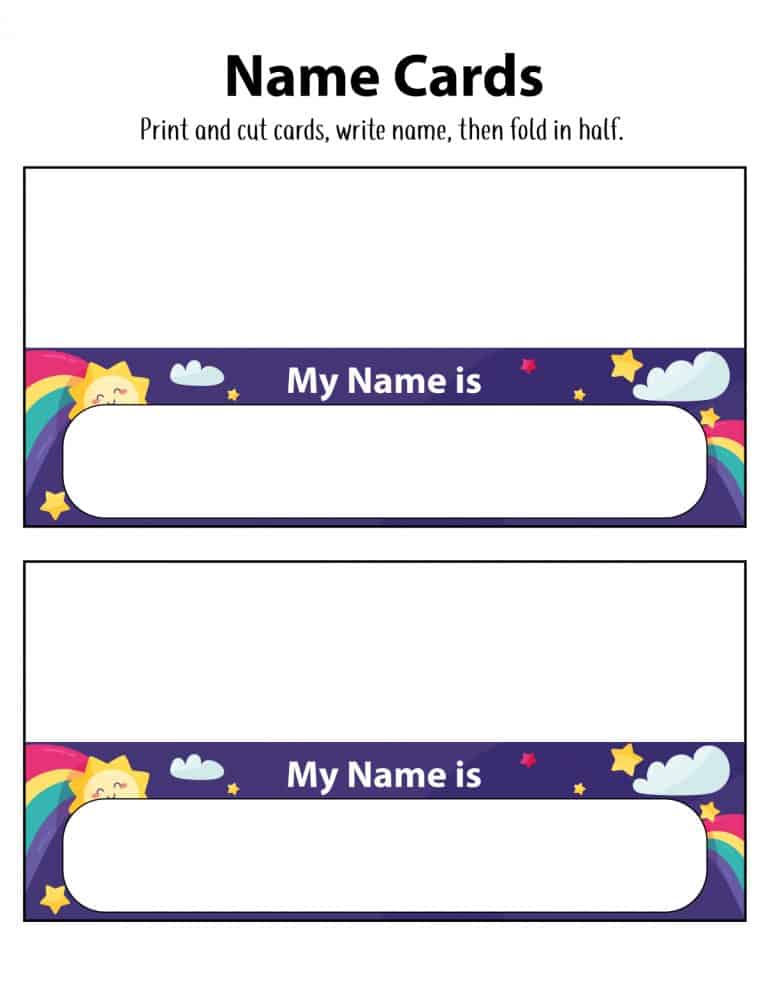
Name Cards is a preschool resource of printable name cards. The destination page is headed with this post’s exact title, and the file it serves, ’58. Name Cards.pdf’, carries this resource’s name under a numbered preschool-series filename — the same item under the filename the site serves it by. The set’s work is foundational in the most literal sense: giving every child in a class a printed name of their own — to recognize, to trace, to wear, to find their place by.
Literacy research keeps returning to the same small miracle: the first word a child reliably reads is almost always their own name. It is the one string of letters whose meaning is guaranteed, whose motivation is built in, and whose shape the child will study with a scholar’s intensity for free. Name cards industrialize that miracle for the classroom. They turn the miracle into furniture: the name on the cubby teaches the walk to the cubby; the name on the table teaches the sitting-down; the name held up at circle time teaches the raising of a hand when one’s letters appear. Belonging rides along invisibly. A child whose name is printed, laminated, and waiting for them each morning has been told, in the school’s own materials, that they were expected — and children who feel expected settle, and children who settle learn. Teachers treat such sets as plumbing: unglamorous, essential, and noticed only when missing. That is the correct valuation. Civilization runs on plumbing, and classrooms run on name cards.
What Learners Will Practise
Reading Themselves First
Learners practise recognizing their own name in print before any other word. The self is the first text every reader ever masters.
Finding Places by Print
The cards practise navigating the classroom by reading — cubby, tray, seat. Print that directs your feet teaches print’s purpose faster than any lesson.
Names of One’s People
Readers practise recognizing classmates’ names alongside their own. A class list read daily is a community becoming literate together.
Key Features
The identity engine is the feature: the most motivating word in any child’s world, printed for use. The belonging signal is the second — a name waiting each morning — and the shelf fit the third, the name cards beside this list’s mothers day and reward cards books. On this shelf it names the class here.
Who This Book Is For
Preschoolers meeting print personally are its first audience. Teachers form its second readership, organizing beginners into community. Parents make its third, receiving the first-day card.
How to Use This Book
Print two sets — one for the room’s furniture, one for the children’s hands; names need handling, not just viewing. Let children carry their card to register for the first weeks; the ritual is the reading lesson. Replace lost cards without ceremony or scolding — belonging should never be rationed by care.
Related Books
The mothers day book stands at Mothers Day, and the reward cards book at Reward Cards.